Clipboard history
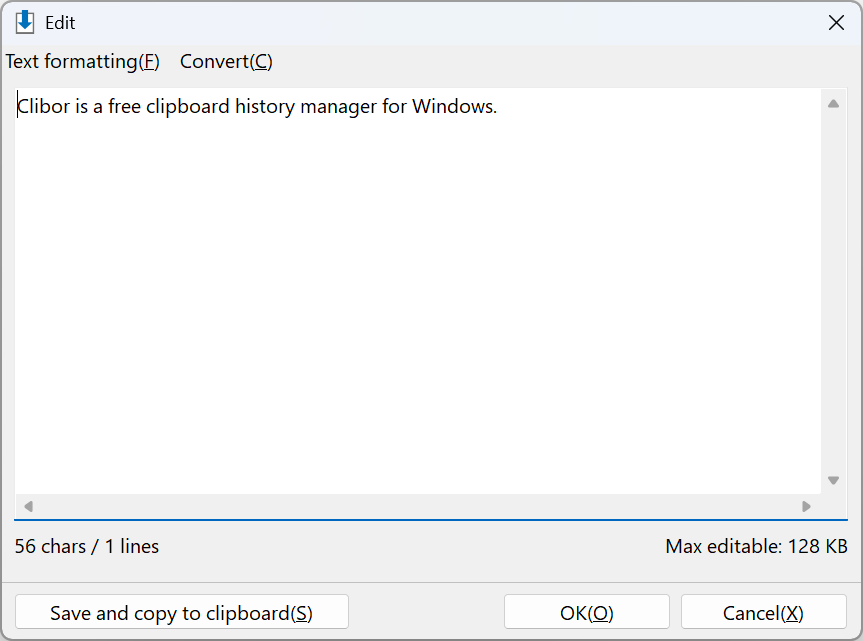
This is the main screen after starting Clibor.
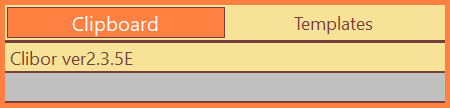
Clibor automatically monitors your clipboard and saves copied text to your clipboard history.
Try copying some text a few times, and you'll see the history being stored.
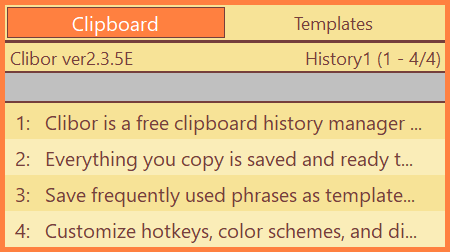
Click a clipboard history entry to copy it to the clipboard and paste it automatically.
Turn off auto-paste in Preferences > General if you prefer copy only.
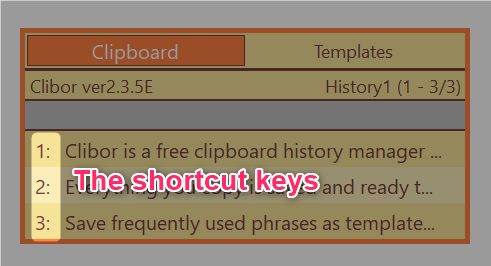
Keyboard shortcuts are also supported. Each entry has a shortcut key (shown below) — press the corresponding key to select it.
The default list displays 25 items, but you can increase this number in Preferences.
Preferences > Clipboard > Number of clipboard history entries in the list
You can also change the order of the shortcut keys to suit your needs.
Preferences > General > Main screen
Up to 10,000 history items can be stored.
Preferences > Clipboard > Maximum number of clipboard history entries to save
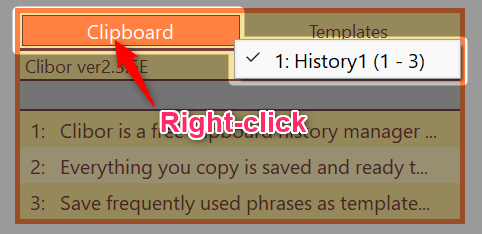
Right-click the Clipboard tab to switch history pages. Pressing Enter when no entry is selected also opens the same page-switching menu.
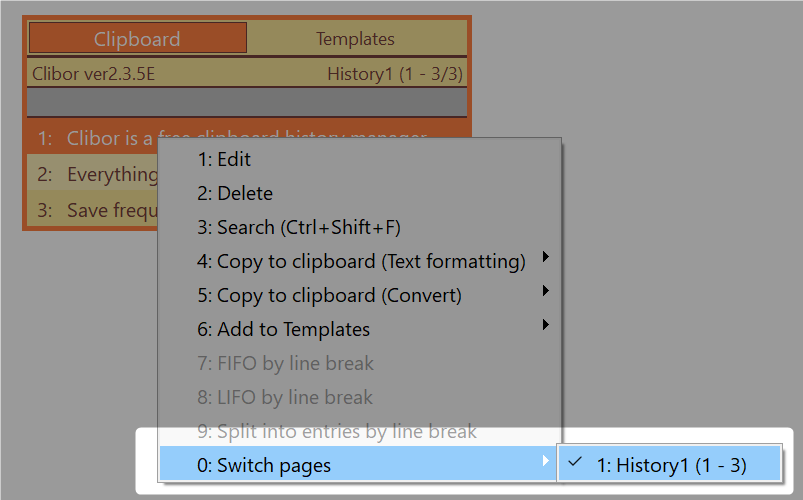
You can also switch pages from the right-click menu on the main screen.
Search and edit clipboard history
On the main screen, right-click and select "Search", or press Ctrl+Shift+F to open the search screen.
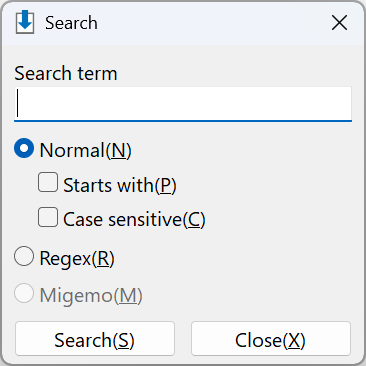
Enter your search terms and click Search to see matching entries.
You can also right-click on the main screen to manage clipboard history from the menu.
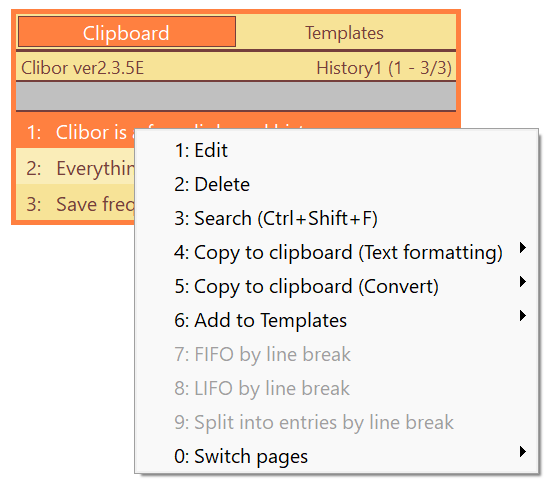
Select "Edit" to edit, format, or convert a clipboard entry.